
Using AI to Pinpoint and Close Learning Gaps
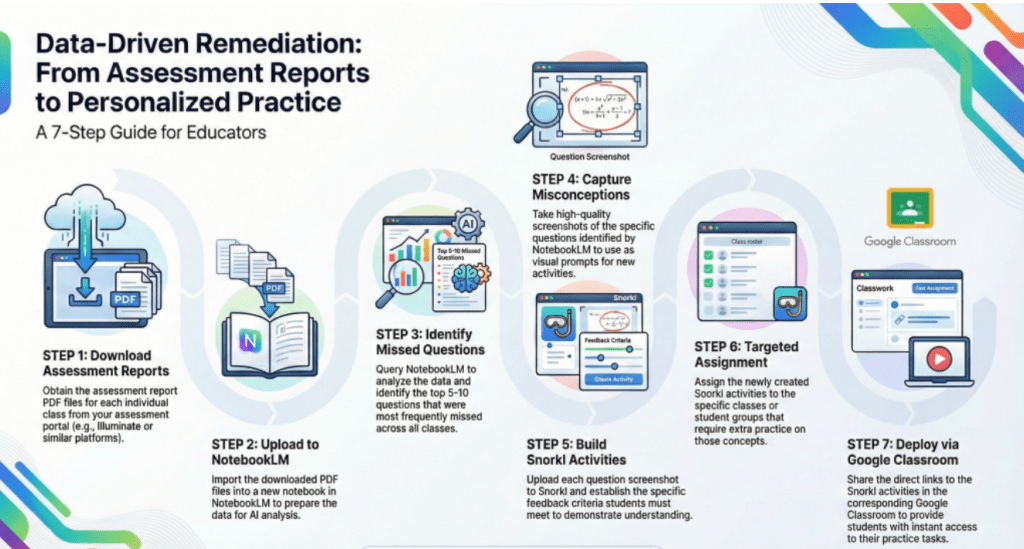
- Analyze: Use NotebookLM to scan anonymized assessment PDFs and identify the most-missed questions.
- Build: Upload screenshots of those questions to Snorkl and set specific feedback criteria for intervention.
- Deploy: Assign the Snorkl activities to the appropriate classes and share the links via Google Classroom.
High school mathematics moves at a rapid pace. When a unit assessment reveals that students are struggling, the challenge for any educator is identifying exactly where the conceptual breakdown occurred and then providing meaningful intervention without losing more instructional days. Recently, I coached a teacher through a streamlined workflow that turns raw assessment data into targeted Tier II instruction using two powerful tools: NotebookLM and Snorkl.
Analyzing Results with Precision
The process begins with the data you already have. After students complete an assessment, the first step is to download the results as PDF files. To maintain student privacy, it is essential to ensure these reports contain no personally identifiable information. Once you have these clean PDF files, they are uploaded into NotebookLM.
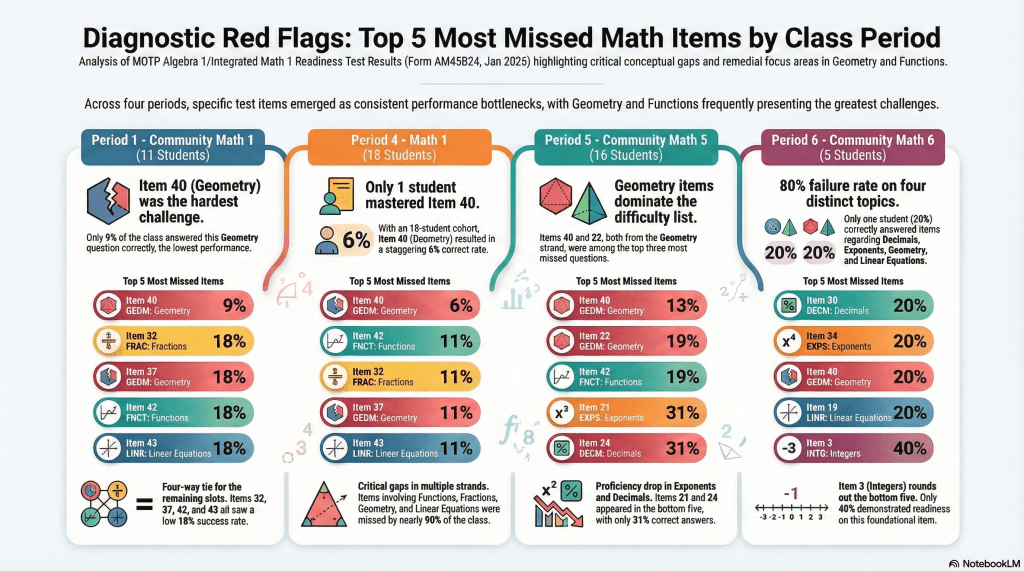
NotebookLM acts as a sophisticated research assistant. Instead of a teacher manually tallying every missed problem across multiple sections, you can simply ask the tool to identify the five to ten questions that students missed most frequently. This immediate synthesis allows you to see past the overall class average and focus on the specific mathematical standards or problem types that require urgent attention.
Building Targeted Interventions
Once NotebookLM helps you identify the weak spots, the next phase is turning that data into an actionable student activity. For each of the most-missed questions, you can take a screenshot of the original problem(s). These images are then uploaded into Snorkl, a platform designed to help students articulate their thinking.
Within Snorkl, you can tailor feedback criteria to the specific nuances of a problem. This ensures that when students revisit a task, they aren’t just chasing the correct answer. They’re engaging with guidance designed to resolve their unique misconceptions. By streamlining the diagnostic process, Snorkl provides a precise foundation for personalized 1-on-1 coaching (re-teaching) during intervention sessions.
Streamlining Student Access

The final step is delivering these resources to the students who need them most. After the Snorkl activities are developed for the targeted questions, they are assigned to the specific classes and students that struggled with those topics. By sharing the direct Snorkl links through Google Classroom, the intervention becomes a seamless part of the student’s digital environment.
This workflow transforms a static assessment report into a dynamic, and more timely, cycle of intervention. It allows teachers to provide high-quality Tier II support that is data-driven and highly specific. By using AI to handle the heavy lifting of data analysis, educators can spend less time highlighting spreadsheets and more time facilitating the mathematical conversations that help students succeed.
This blog post was drafted with the help of Google Gemini to help organize and flesh out my thoughts and ideas regarding how to use NotebookLM and Snorkl to analyze assessment data and develop Tier II activities delivered to students via Google Classroom. I also used NotebookLM to generate a brief audio overview, perfect for those who want to listen and learn on the go.
If you enjoy this blog, you’ll love our new book, History Matters in an AI Era. Available now on Amazon, this book shares practical, research-based strategies for integrating technology into history lessons. You’ll learn how to use technology to increase student engagement and curiosity. Click here to get your copy today.

Leave a comment