
- Integrate Computer Science: Activities that build computational thinking skills like decomposition and algorithmic thinking across all subjects.
- Spark Inquiry: Get students actively dissecting topics and asking questions, serving as powerful “pre-work” for deeper learning.
- Adaptable for Any Subject: Versatile strategies in ELA, History, or STEM to foster curiosity and analytical understanding.
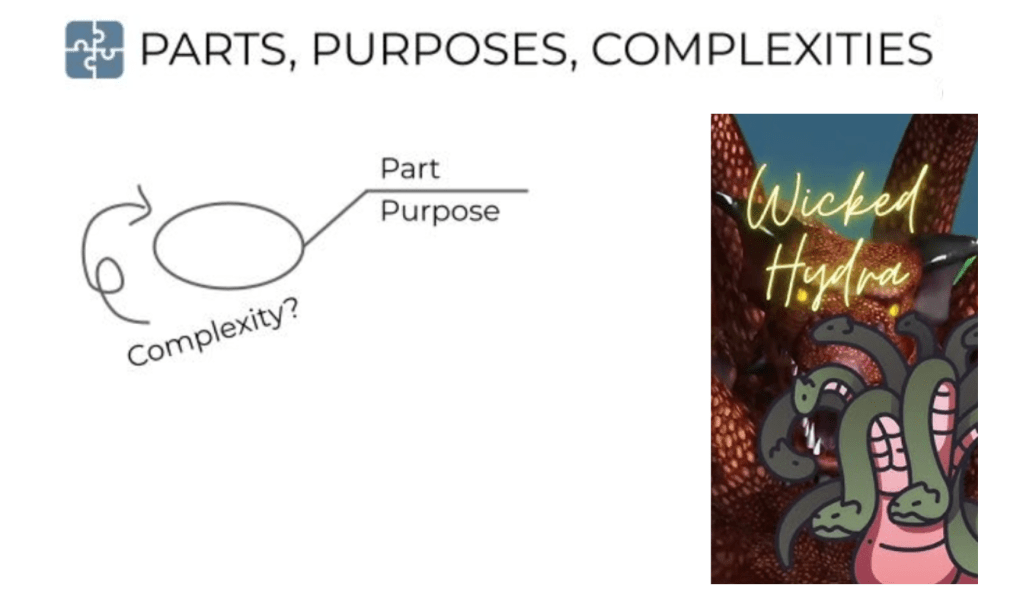
In today’s educational landscape, fostering critical thinking and genuine curiosity is more important than ever. Two powerful tools for achieving this, include the “Parts, Purposes, and Complexity” handout and the “Wicked Hydra” activity. These strategies can serve as fantastic “pre-work,” setting the stage for deeper learning and empowering students to approach new topics with an inquisitive mindset. Beyond their direct benefits, both activities offer unique opportunities to seamlessly integrate computer science concepts across content areas, making ideas like computational thinking, decomposition, abstraction, pattern recognition, and algorithmic thinking tangible and relevant.
The “Parts, Purposes, and Complexity” activity, which is part of the Stanford Thinking Strategies, offers a structured yet flexible framework for students to dissect a concept or a physical device. Imagine introducing a new piece of technology, like a drone or even a complex software program. Students can individually or collaboratively break down the subject into its smaller components. This act of decomposition is a foundational element of computational thinking, where a large problem is broken into smaller, more manageable parts. They might label different parts of a drone, for example, identifying the propellers, the camera, and the battery.
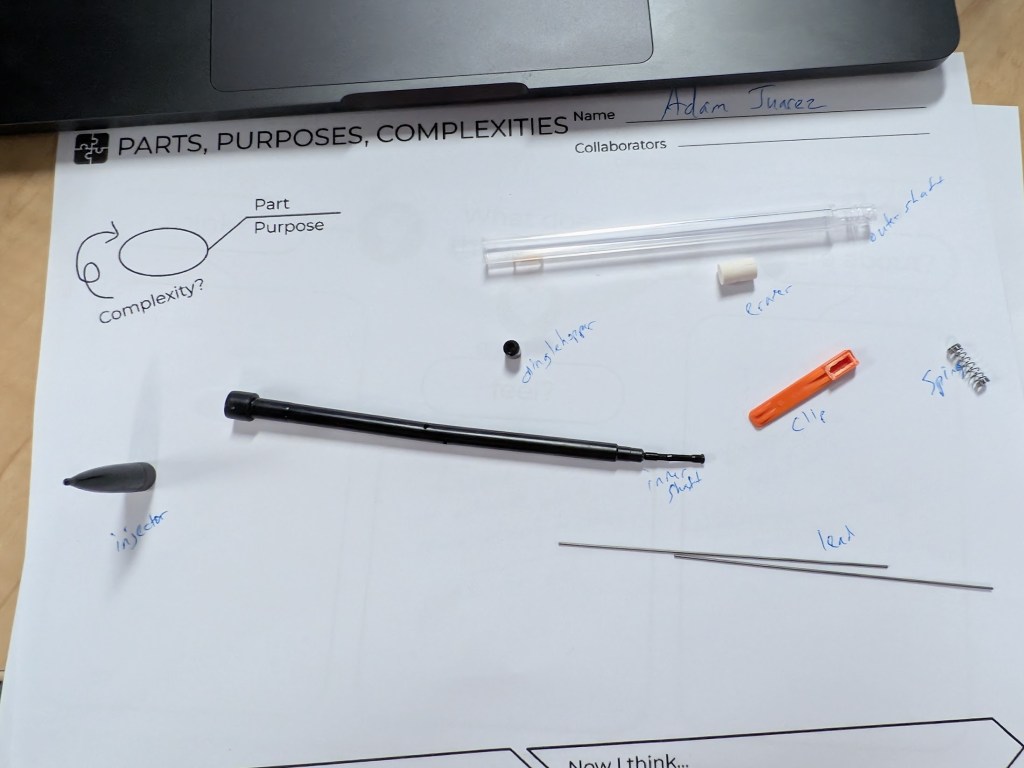
In an ELA class, students could break down a complex literary theme into its contributing narrative elements, character developments, and symbolic representations. Beyond simply labeling, they then describe the purpose of each part: what is it used for? Finally, and crucially, they explore how these individual parts work together to achieve the overall function of the drone or the overall meaning of the literary theme. This step highlights algorithmic thinking and pattern recognition, as students identify the relationships and sequences of operations that lead to a complete system. This exercise helps students build a foundational understanding before diving into more intricate details. It’s a wonderful way to encourage systems thinking and to see the interconnectedness of elements.
To amplify the inquiry aspect, you can integrate the “Wicked Hydra” Eduprotocol. (The Wicked Hydra is an activity I learned not too long ago from Butte County Office of Education’s Jacob Carr.) Following the “Parts, Purposes, and Complexity” breakdown, engage in the Wicked Hydra by taking each identified piece or component and dedicate a separate piece of chart paper to it. For instance, if you were studying a computer, you might have separate charts for the CPU, the RAM, the hard drive, and so on. In a history class, if students were analyzing a historical event like the American Revolution, individual pieces of chart paper could be dedicated to key figures, significant battles, or foundational documents. Students then rotate from station to station, and at each station, they are prompted to write questions about the specific component. This constant generation of questions encourages students to identify gaps in their knowledge and to think about different inputs and outputs.
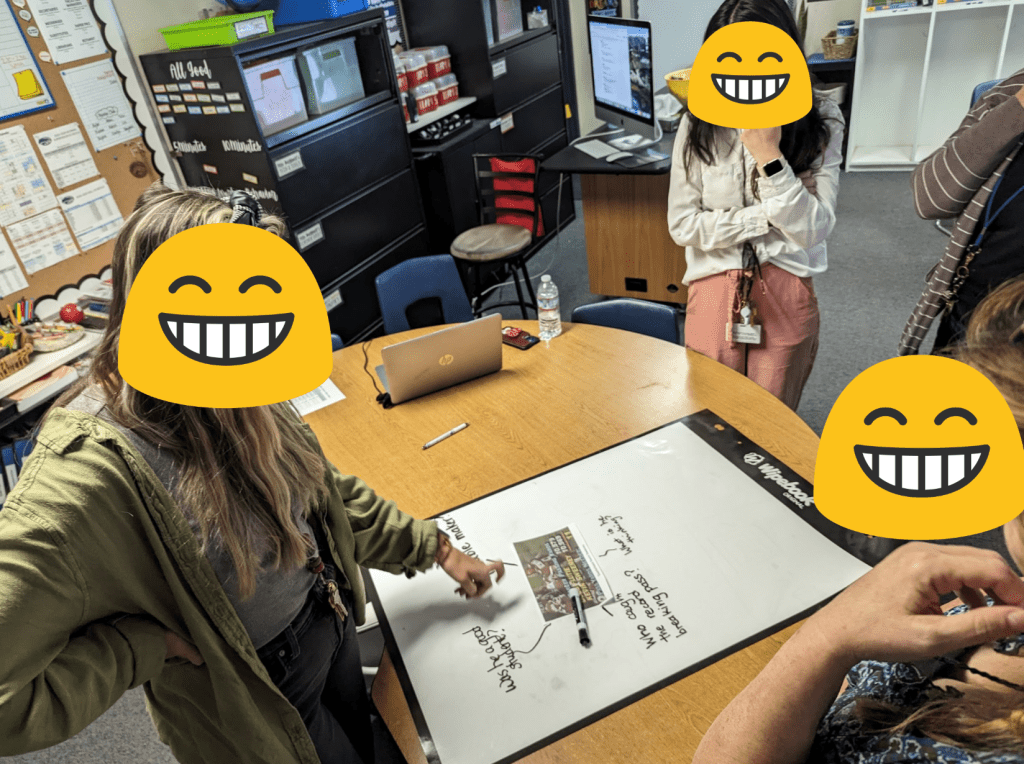
The iterative nature of the Wicked Hydra, with students rotating through several rounds and continuously generating new questions, promotes algorithmic thinking as they follow a systematic process of inquiry. It also hones their abstraction skills by forcing them to focus on the essential unknowns of each component. This questioning sparks curiosity and encourages students to think broadly about what they don’t yet understand. After several rotations, the class can come together to discuss the generated questions, collaboratively seeking answers and deepening their comprehension.
Both the “Parts, Purposes, and Complexity” activity and the “Wicked Hydra” are incredibly versatile. They can be applied to a wide range of subjects, from the mechanics of a simple machine to the abstract concepts within a historical event. By using them as pre-work, you are not just introducing content; you are cultivating an environment of inquiry. Students become active participants in their learning journey, building context and developing a genuine curiosity that propels them toward deeper engagement with the subject matter. These activities are powerful examples of how to seamlessly blend computational thinking with active learning, preparing students not just to consume information, but to truly understand and question the world around them.
This blog post was drafted with the help of Google Gemini to help organize and flesh out my thoughts and ideas regarding using the Parts, Purposes, and Complexity activity and Wicked Hydra Eduprotocol to foster computational thinking and inquiry. I also used NotebookLM to generate a deep dive audio overview, perfect for those who want to listen and learn on the go.

Leave a comment