
- Role-playing games bring stories and student thinking to life
- Conditionals and loops deepen understanding of plot and choice
- Low-tech activities build real-world computational thinking skills
What if your students could play through a story instead of just reading it?
That’s exactly what one innovative lesson invites them to do—by transforming a classic literary tale into a role-playing game using nothing more than index cards, markers, and a whole lot of imagination. Designed for upper elementary grades, though adaptable for younger learners, this activity not only deepens literary understanding, but also builds critical computational thinking—no screens required.
From Story to Simulation: The Lesson in Action
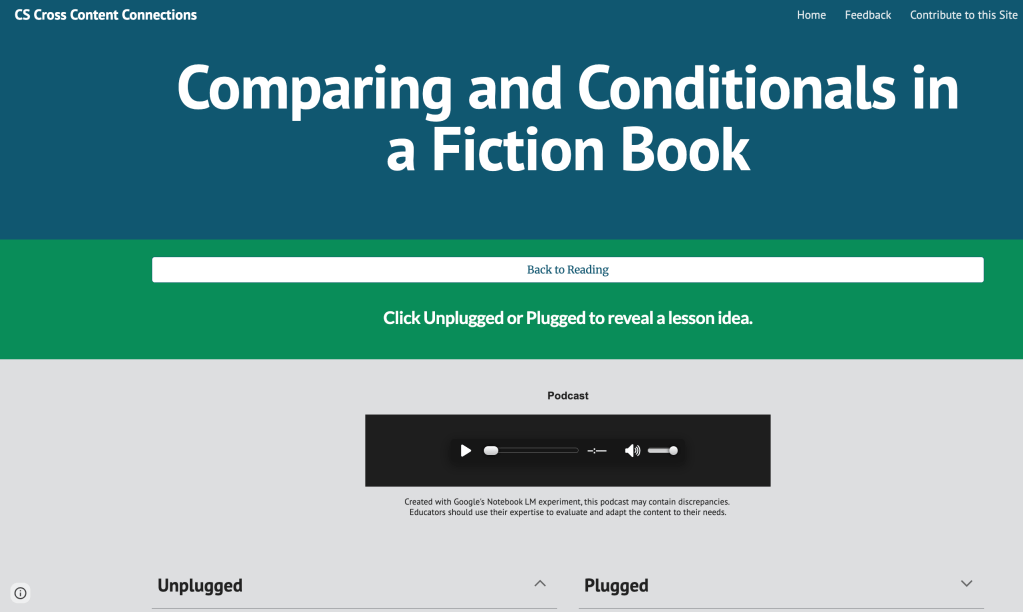
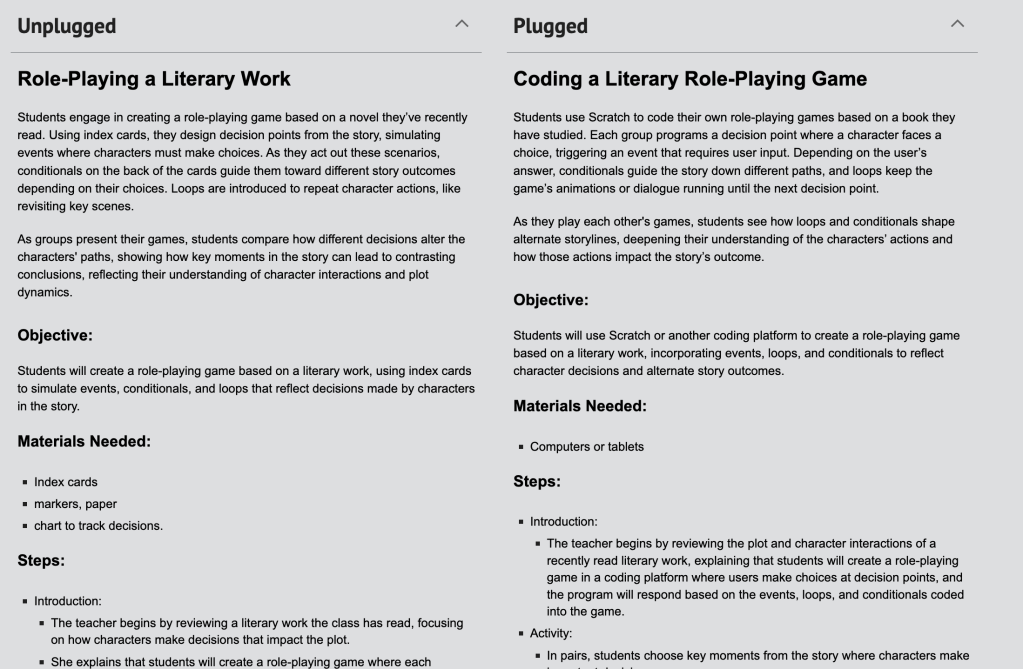
The objective is simple but powerful: students create a role-playing game (RPG) based on a literary work. Each decision a character makes becomes a “branch” in the story, modeled with conditionals (if/then statements) and loops (repeating actions). If you’re imagining Marvel’s What If series, you’re on the right track!
The lesson begins with a review of the story—focusing on how character choices shape the plot. Working in pairs, students map out key events using flowcharts, then write out those moments on index cards. Each card becomes a moment of choice: “If the wolf blows down the house, then…” Flip the card, and you’re on to the next outcome.
To add depth, students use loops to show repeating events—like a character reappearing or a pattern repeating. Then comes the best part: acting it all out! Students simulate their RPGs, comparing how different paths lead to different endings. In the end, each pair presents their game, explaining how their conditionals and loops captured the twists and turns of the plot.
Real Talk: Computer Science Is More Than Coding
This lesson is an example of how computer science isn’t just about writing code or using devices. It’s about thinking logically, structuring ideas, and solving problems, skills that students can build with a stack of index cards. Through storytelling, they learn to recognize patterns, break down complex decisions, and model consequences, all fundamental elements of computational thinking.
Classroom Remix: Dinuba’s Whiteboard RPG
One 5th grade class in Dinuba, CA took this lesson to the next level with a creative, no-tech twist. Using a local retelling of The Three Little Pigs, students mapped out the story’s events on whiteboards, plotting them vertically to show the main narrative arc. In the margins, they marked key “forks in the road”—moments where a character’s choice or a shift in circumstance could send the story in a completely different direction.
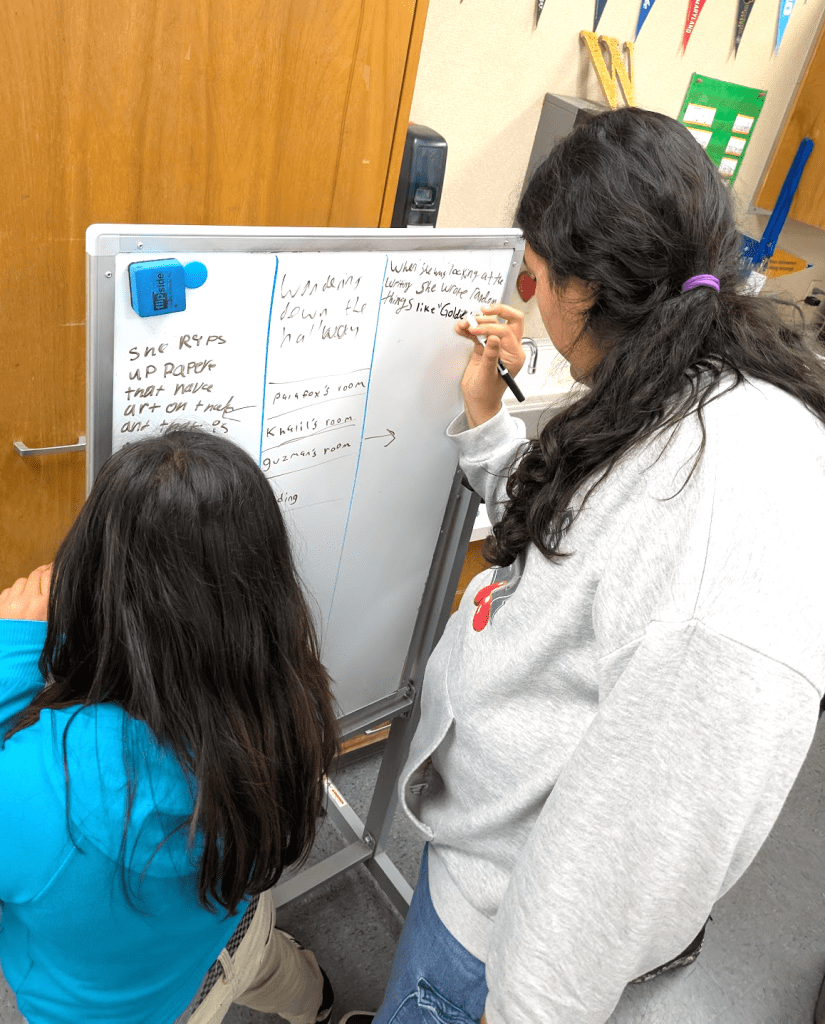
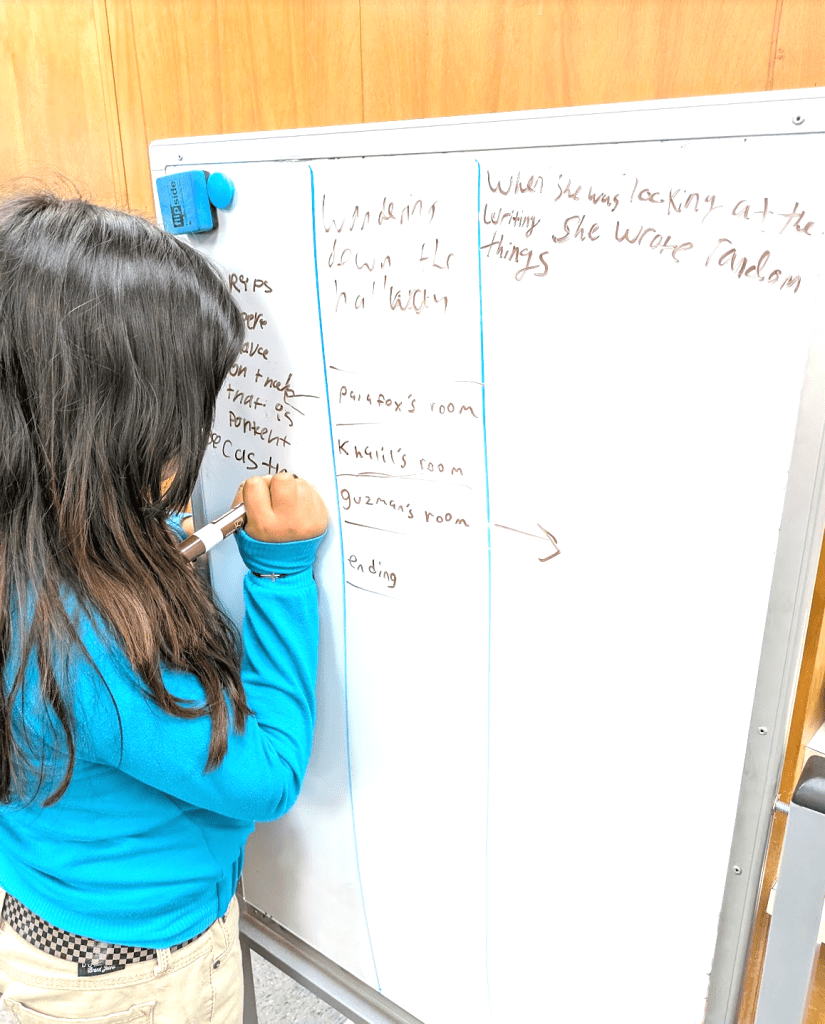
This side-by-side layout allowed students to compare the original storyline with imaginative alternate realities. What if a pig chose to team up with the Big Bad Wolf? What if a character went down the metaphorical “tube” instead of jumping over it? Just like in a video game, think Super Mario, the decision changes the journey.
Try This in Your Classroom!
Want students to see literature through a whole new lens? This low-tech, high-engagement lesson bridges ELA and computer science beautifully. You’ll foster critical thinking, creativity, and collaboration, all while having a blast. Plus, it’s fully aligned to CA ELA and CS standards.
This blog post was drafted with the help of ChatGPT to help organize and flesh out my ideas regarding the Cross Content Connections website and how a teacher remixed a lesson idea. I also used NotebookLM to generate a deep dive audio overview—perfect for those who want to listen and learn on the go.

Leave a comment